September 2009

william kamkwamba’s windmills: creating currents of electricity and hope

windmill-maker

William Kamkwamba was fourteen and living in drought-stricken Malawi when he stumbled on a library book called Using Energy, and saw a picture of a windmill. He thought that if he could make one, he could provide electricity for his family, pump water and irrigate crops, and power light for reading at night, as well as a radio. So William set about to make his windmill out of spare parts and scrap he found: wood, a bicycle frame, a pulley, a piece of plastic pipe, some wire read more…

more on d-i-y wood ovens: books, sites, recipes…

www.dinnerjulie.com

www.dinnerwithjulie.com

Once the door to an idea opens, information often miraculously seems to appear. There’s some sort of attunement that seems to happen when you hold a question in mind and start trying to figure it out; perhaps it’s simply a shift in awareness that makes us see the answers around us.

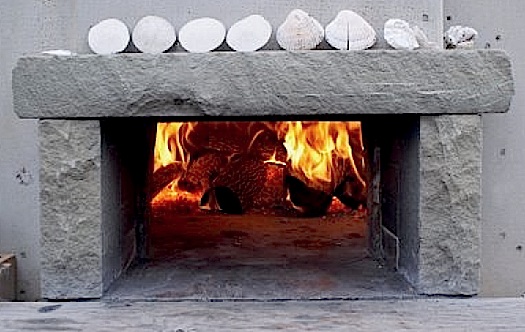
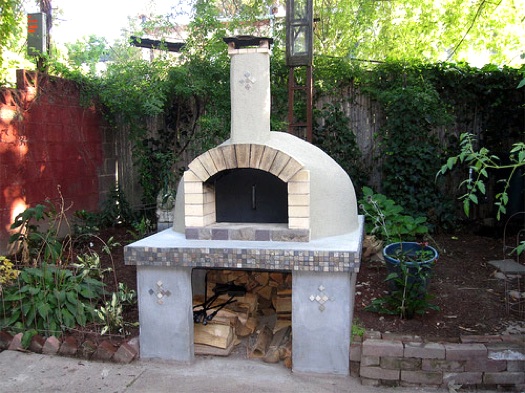
Right after I wrote about d-i-y pizza-ovens, I started to stumble upon books and websites with in-depth instructions and resources for building and using wood-fired ovens, a change in name that expands the content considerably (beyond pizza – just about any food benefits from being cooked in a wood-fired oven). Even if you don’t actually have a space to build a wood-fired oven right now, these resources can help you formulate ideas for when you do, or for when you’re out camping and want to apply some of its principles to a make-shift oven. Some books, like the definitive The Bread Builders: Hearth Loaves and Masonry Ovens, will even guide you to achieving some of the effects of a masonry oven, using an ordinary gas or electric oven. read more…

stealth improv: philip besonen’s backyard retreat

Spencer Tirey/New York Times

Spencer Tirey/New York Times

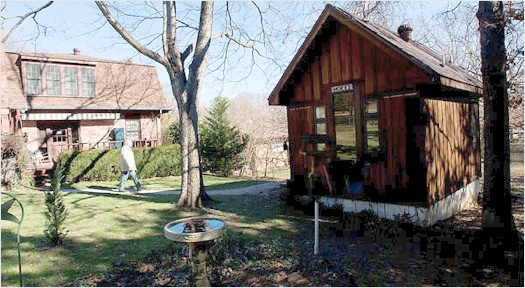
Philip Besonen was a remarkable man who most people hadn’t heard of until he wrote a piece for the New York Times about the mokki he built in his back yard. A mokki (rhymes with hokey) is a small unassuming cottage much beloved in Finland, where Philip had roots. “Mokkis …were invariably off by themselves near lakes or trees, in settings where you could find peace. The feeling of serenity was the most striking thing about them.” wrote Philip.

He’d wanted to build a mokki because he was about to retire and couldn’t bear the idea of not having an office, and because during his entire life of living in a large family (first as a child, then as a married man with children), he craved privacy: a place of his own.

Knowing that this wouldn’t go over too well with his wife who opposed “frivolous” expenditures, Phil had to use stealth in building his mokki. read more…

stairs in colors

Kim Sykes

Kim Sykes

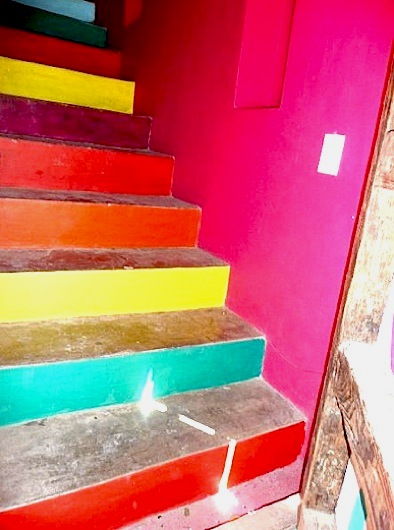
Architect Kim Sykes spotted these wonderful color-painted stairs in Sayulita, Mexico. Whoever made them cunningly painted each stair on the side that doesn’t get stepped on (so you’d only get the effect from a distance, and going up). Though Mexico is renowned for it’s brash use of color, colored stairs are a world-wide theme: a simple way to make the path up or down more welcoming and interesting.

Here are more sightings, including this spectacular, intricate pattern of colored vinyl tape made by artist Jim Lambie at the Museum of Modern Art. read more…

whipped cream with sea salt, and other 2-ingredient discoveries

Sally Schneider

Sally Schneider

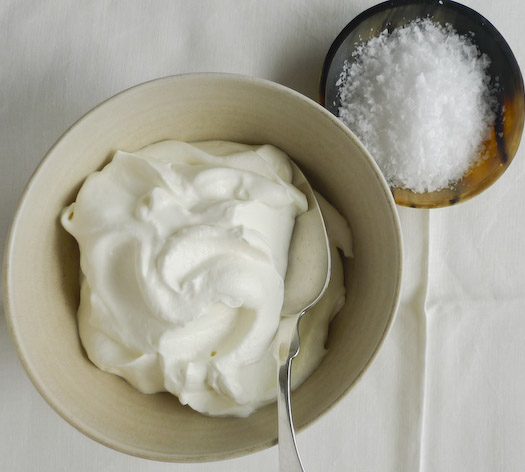
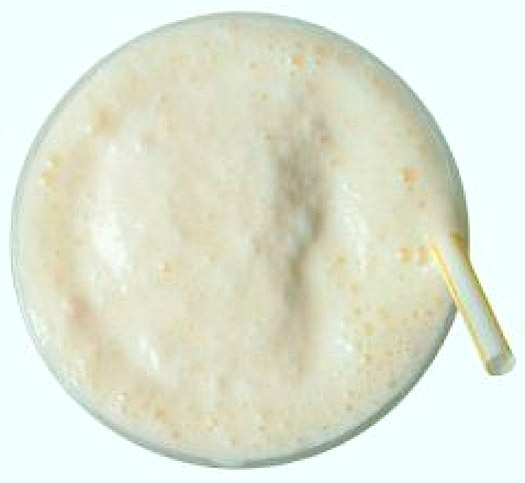
At the end of an impromtu dinner party, my friend Josh served a chocolate cake with herbes-of-Provence salt his wife Ellen had made. To accompany it, he had whipped some extraordinary bio-dynamic cream from a farmer friend, and I popped a spoonful in my mouth, sans cake, to savor it.  Perhaps it was the bowl of sea salt in my sight lines, or the conversation we’d had earlier about using an herb salt instead of regular salt in the cake that gave me the idea: I sprinkled a few grains of salt onto another spoonful of the whipped cream. And there, in an instant, was a completely “other” notion of whipped cream; the salt brought out the cream’s sweetness and nuance, without being salty, a perfect counterpoint to the rich cake. It was a revelation, and one that I’d use with future desserts.

Throughout my cooking life, this kind of fortuitous collision of two or three unexpected elements has often occurred often in the kitchen and at table. read more…

a modernist island retreat (on a budget)

suzanne-shaker-11

Catherine Tighe

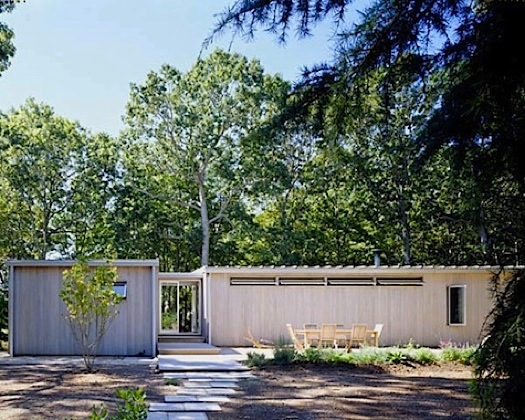
Remodelista posted some terrific pictures of my friends Suzanne Shaker and Pete Dandridge’s perfect summer house on Shelter Island, 2 hours from New York City. Suzanne, an interior designer and stylist, and Pete, an art conservator, worked with Deborah Burke  & Partners Architects to build the 1250 square foot from-scratch house. It seems incredibly spacious, due in part to large glass doors and picture windows (one whole side of the house) that bring in the surrounding woods and nature, and a 20-foot dining/living/kitchen area. Ample storage keeps the minimalist house from looking cluttered.

What Remodelista doesn’t mention is that the house was made on a strict budget –  less than half of what a house in this part of the world would normally cost. Every design decision was meant to be both beautiful and practical, if not always easy; the budget demanded that Suzanne and Pete give up some ideas they’d seen as essential, and become more resourceful in finding solutions. They went with inexpensive materials in many places, to spend more on others.  read more…

guest post on vivianna torun and ‘seeing what happens’

torun-jewelry

After reading Anni Albers ‘Common Object’ JewelryLydia Wills wrote an inspiring email that is a perfect, if inadvertent, post for ‘the improvised life’. It’s like a bedtime story for grown-ups (with an amazing ending in bold.)

“The lesson of Anni Albers’ jewelry is her ability to look at everyday objects and see just how they can be re-imagined on the body, how their shape and curve and sheen will look when worn. A simple object, not only seen in a new way, but taken a step farther. It’s only improvisation when it goes from the mind’s eye , passing through your hands, and out into the world.

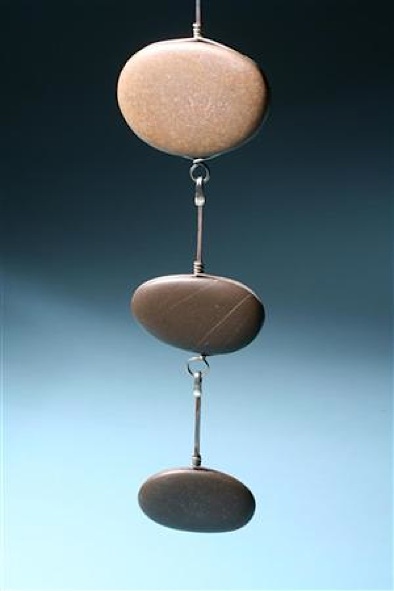
This is exactly the lesson of my favorite jewelry designer, the truly great Vivianna Torun Bulow-Hube, who was born in Sweden and went on to design for Georg Jensen. She set out early to make “anti-jewelry,” that is, jewelry you don’t store in the family vault until the fancy night arrives, and then snap shut in the vault. She worked with materials that lived and breathed out in the open–rocks, stones, pebbles, silver and saw how they could be shaped to fit the human form.

When she was broke in the 50s in France, she used to go to the beach and look for stones and pebbles that she could work into her simple silver wires and hand-hammered necklaces. read more…

jars with chalkboard labels to buy or d-i-y

chalkboard-jars1

Pamela Hovland alerted me to these cool jars that have chalkboard labels so you can just scribble the contents (or the date) with chalk. You can by them at Rockett St. George for 12.50 euros and have them shipped from the U.K. OR you can rig your own.  Paint labels directly on jars using chalkboard paint by hand or with chalkboard spray paint (follow the directions and caveats here). Or make or buy press-on labels like these from an industrious Etsy seller who cuts them out of chalkboard vinyl (fine for jars with a flat surface).

The wonderfully-shaped Weck canning jars would be great with painted labels (though press-on labels would probably work on their gentle slope.

broke-down-taxi-on-the-expressway improv

Jay Richmond

Jay Richmond/Google Earth

What do you do when the car service car you hired to take you to the airport during rush hour stalls on the Long Island Expressway on your way to catch a transatlantic flight?

I’d been sitting in the sweltering car for 20 minutes on that bleak, scary highway, waiting for the dispatcher to call with news that another car was on the way. The driver, who had failed to get the motor going with his “jumper box”, had opened the hood and trunk to signal “stalled car” to the heavy traffic around us, and was on his cellphone pleading with his sister buy him a new battery and bring it to him. My calls to the car service now yielded nothing but piped music as I sat on hold.  I called two other car services. “We can’t pick you up without an address. Sorry.” Time was flying.

“Damn.  What the hell am I gonna do?”  I found myself thinking about my blog, and its big message:  that there is always a solution in the moment.  ”I’ve got to put this into practice, somehow…Think, Sally.  What are the options?!” read more…

music for monday: finding giuseppe logan

giuseppilogan_assemblyny2

Margot Ducharme/Assembly New York

‘the improvised life’ is about following links, paths and connections, letting one thing lead to another to unexpected discoveries; it’s what I do daily to write the blog. And everyday, I’m surprised.

I can’t remember where I found this beautiful photograph*; I clipped it for the Surprise Box (the box with the ribbon on the right)  and couldn’t follow the path back to it. Googling the name embedded in the image lead me first to a Wikipedia entry of ‘Giuseppi Logan‘, an esteemed though little-known saxaphone player with a cult following and a mysterious story. Then I stumbled on this video and listened to him playing Begin the Beguine a capella; I felt like a gift had dropped in my lap. read more…

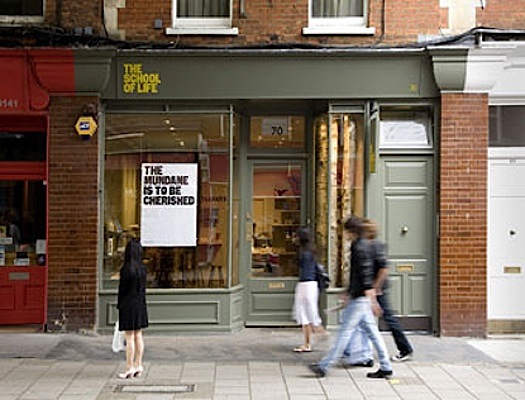
cherish the mundane

School of Life

School of Life

more anni albers common-object jewelry

annie-albers-hairpin-neckl1

Albers Foundation

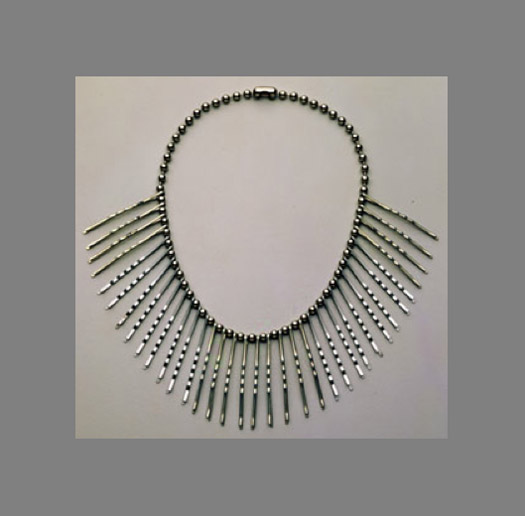
During World War II, when materials were in short supply, textile artist Anni Albers improvised charming, inventive jewelry using simple components usually found in hardware and stationary stores, and five-and-dimes. This dramatic necklace uses inexpensive window chain sold on giant wheels at hardware stores and steel bobbi pins. Seeing her necklace, suddenly these objects become BEAUTIFUL and full of unexpected possibilities; our notions of jewelry change. read more…

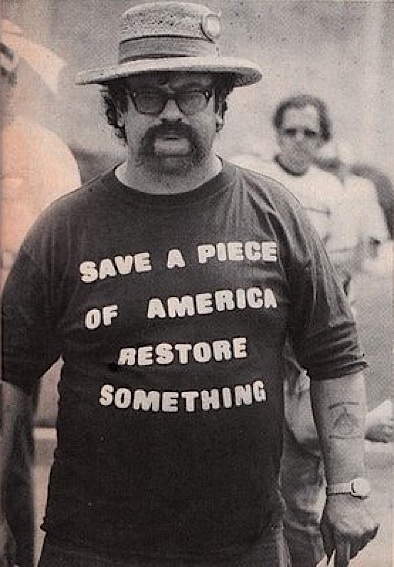
restore something

restore-something

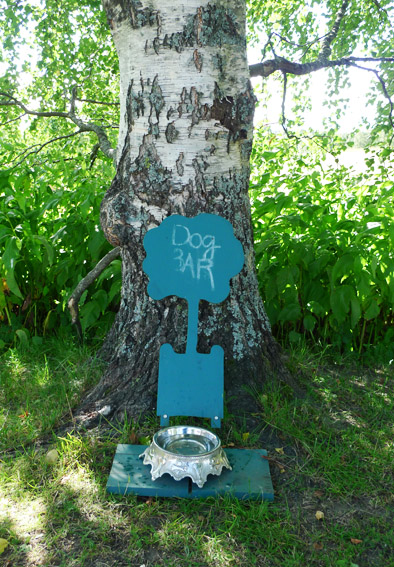
dog bar!

dog-bar-2-redo

Another imaginative idea from Tertin Kartano, the wonderful farm-hotel-restaurant-cafe-store in Mikkli, in Southern Finland. Words aren’t really necessary, though this other picture is pretty inspiring: Expands your view of dogdom…see/ read more…

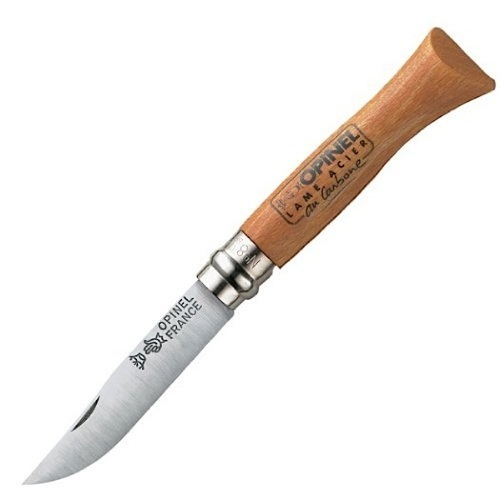
a perfect, portable knife for errant cooks

opinel-500-px1

When I’m camping in a borrowed or rented house out of town, I love the challenge of cooking in the invariably rudimentary kitchen with whatever is there. It’s fun to devise solutions to small dilemmas: making roasting pans out of tin foil, or rolling pins out of wine bottles. I’ve made cheese souffles in cast-iron skillets, and used the same skillet to smoke trout using dried twigs from a nearby apple tree. These small challenges are somehow gratifying.

The one thing I always bring with me, though, is a good knife – NOT a set of chef’s knives bound in a leather roll – but a simple, inexpensive, picnic knife from France, the Opinel. read more…