

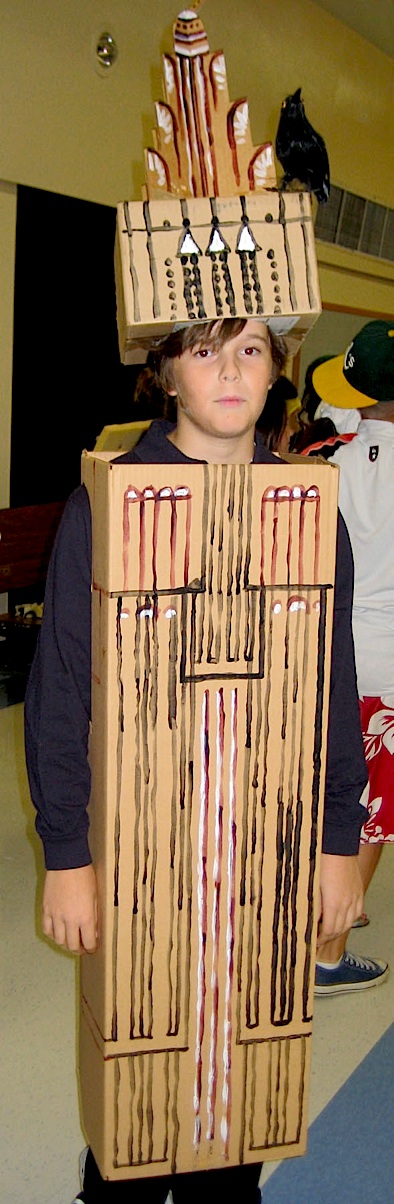
halloween inspiration: cardboard box as the empire state building
Designer Pamela Hovland sent this image of her son Henry’s costume, a family collaboration. It’s amazing what recycled cardboard boxes and some paint can become… Thanks Pamela!
Read More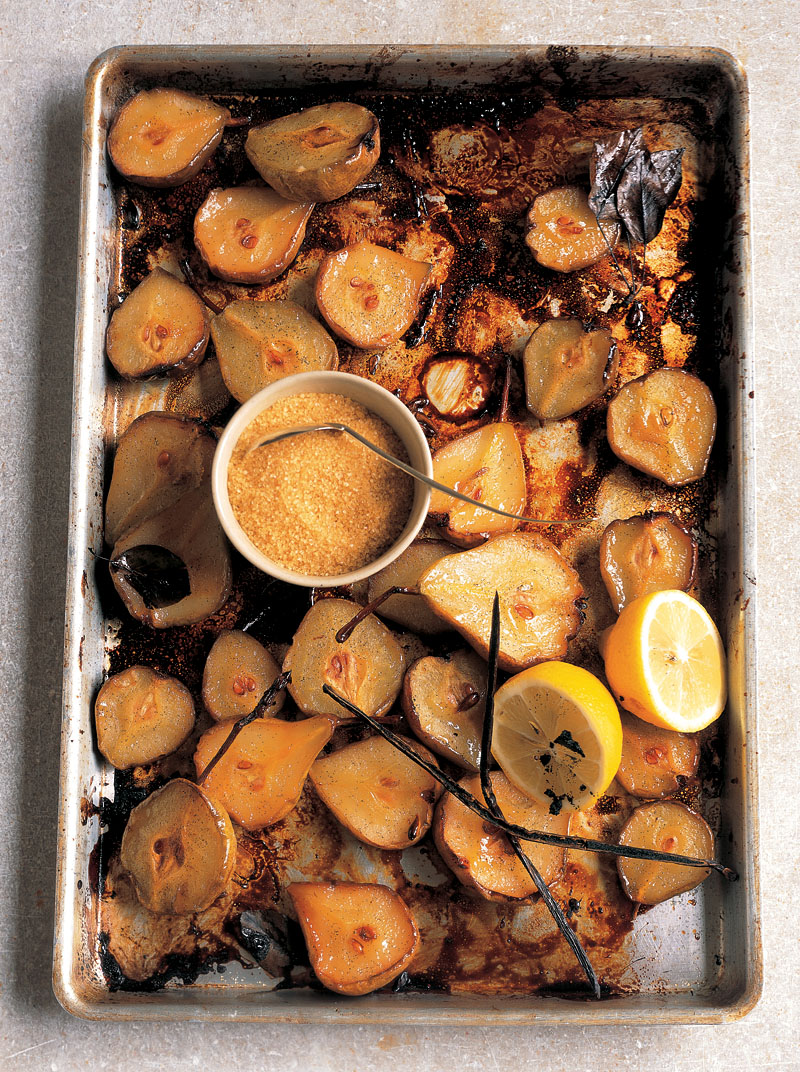
recipe: roasted pears for sweet or savory improvisations
Throughout fall and winter, one of my favorite improvisational “base” preparations is Roasted Pears. These are pears that are roasted with a bit of sugar, lemon juice, butter and a split vanilla bean or even herbs, until they become tender and caramelized, with a concentrated pear flavor. Roasted Pears are one of those miraculous recipes…
Read More
tool for improvising: embrace mistakes
Today, I found a comment at the end of my post about deferring judgment. It read: “Is it too judgmental to note that in the U.S. “judgment” is the preferred spelling?” OMG!!! The sign I had spent forever trying to make was spelled wrong (“judgment” is spelled correctly elsewhere in the post). It is NOT…
Read More
tool for improvising: defer judgment
When software engineer Gever Tulley left his job at Adobe to start his Tinkering School for Kids, he posted a letter on his blog, ‘some things right ‘, to the people he had worked with. In it, he left them with some “good ideas” like Play! and Instead of Having a Career Path, Always Do…
Read More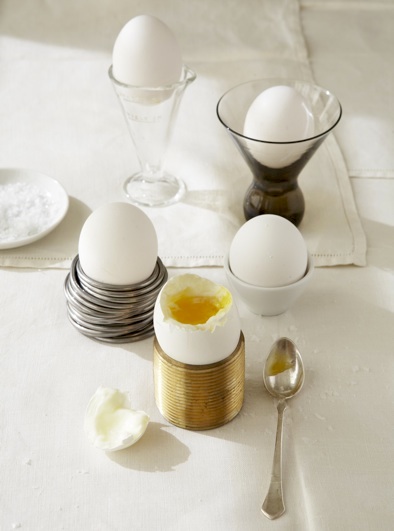
d-i-y egg cups + recipe for perfect soft-boiled eggs
Hardware stores and art supply stores are great places to inspire your improvisational leanings, using a variation of the children’s game “inventing”: think of uses for things you may not be familiar with. The other day, as I was browsing through bins of bolts, screws, hunks of pipe and gaskets in my local hardware store, I…
Read More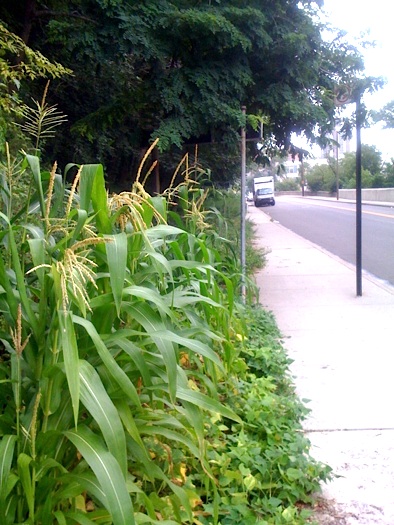
new york city’s taxi farmers
As today’s guest blogger, David Saltman tells of his discovery of some inadvertent guerilla gardeners. He did some on-the-spot investigative reporting for ‘the improvised life’ and photographed the story with his i-Phone. Thanks, David! “I was walking down the street in New York City recently when I ran smack into a cornfield. It was no hallucination —…
Read More
the rich rewards of an unplanned day
Today was a day of wondrous tiny occurrences, the kind that happens when we are relaxed and open and looking around at the world, rather than rushing to get somewhere or get something done. The leaves literally turned color while we slept: a blaze of oranges and reds shimmered against the clear blue sky. Walking…
Read More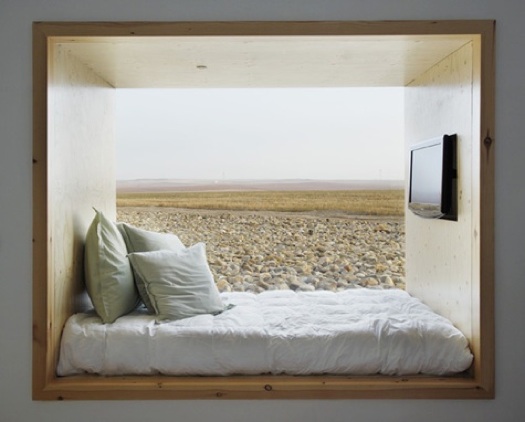
trompe l’oeil room (cocoon) bed: opinions wanted
via Remodelista I continue to mull ways to merge office and bedroom without sleeping in the midst of the fray of papers and projects…and stumbled on an interesting variant of the idea posted earlier, of creating a little shed in the office/bedroom that would be a sleeping cocoon, protected from officey stuff and the idea of…
Read More
everyday objects con’t: junya watanabe’s zipper and snap improvs
After reading yesterday’s post ‘the safety pin (and other everyday object) improvisations’, Lydia Wills sent me photos from fashion designer Junya Watanabe’s 2005 collection, where he used zippers and snaps in the most beautiful way: layers of gold zippers become something totally other. Look closely and you’ll see that, aside from the gold plating, these…
Read More
the safety pin (and other everyday objects) as improvisation
Every great invention, from the Murphy bed to the bicycle, started as an improvisation: an elegant solution to something someone needed or just plain wanted. But an improvisation never stops there. The improvised invention gets improvised upon, and that improvisation gets improvised upon, and so on, and so on. Viewing the everyday objects around us…
Read More
Improvised Life: “A Zeitgeist-perfect Website” !!!
Not yet four months old, ‘the improvised life’ got its first public mention today, in Manhattan User’s Guide, a daily, often surprising, newsletter and website that is THE word on what’s happening in New York and beyond. Here’s what it said: “NYC journalist, chef, and author Sally Schneider has launched a new, zeitgeist-perfect website that…
Read More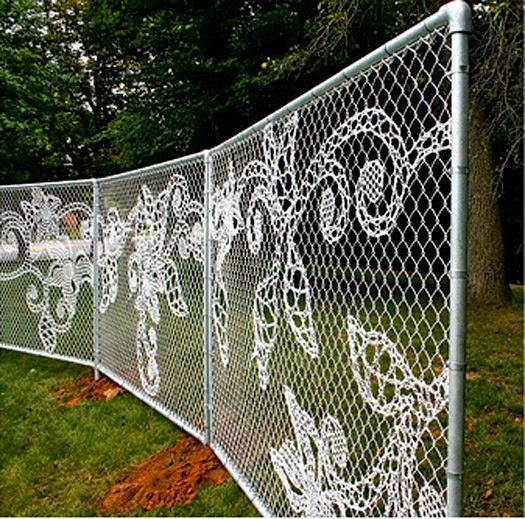
d-i-y? lace chain-link fence
The Dutch design firm Demakersvan created this lace chain-link fence in response to a challenge by the Design Center at Philadelphia University: to create a site-specific work inspired by a collection of historic Quaker lace for an exhibition called Lace in Translation. Demakersvan totally transformed ugly industrial fencing by applying what looks to me to…
Read More
sink as work surface, designed by a cook
When Margot Wellington designed the kitchen of her house in East Hampton in 1984, she defied the usual notions of kitchen design. Instead, she set out to incorporate the elements she found essential from many years of serious cooking and entertaining. One of her most remarkable innovations was the design of an eleven-foot-long stainless steel…
Read More
a (mind) game for cultivating resourcefulness
Helvetia is a tiny town in the West Virginia Appalachians where I‘ve learned a great deal about improvising over the nearly forty years I’ve been visiting there. Settled by Swiss-German immigrants in 1869 who started from scratch in its wilderness valley, a strong tradition of resourcefulness courses through the town. “If you don’t got it,…
Read More
recipe: wild mushroom ragu + “big macaroni”
One of my favorite cooking strategies is to a make a big batch of a mutable “base” with which I can improvise appealing dishes, in tandem with whatever is on hand. In fall and winter, that base is often Wild Mushroom Ragù, a rich, hearty, meaty (but meatless), stew-like sauce made with whatever cultivated “wild”…
Read More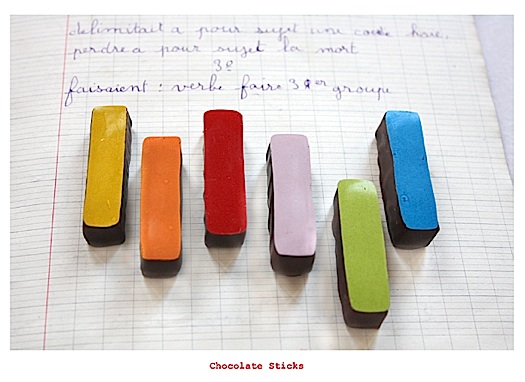
surprise: susan hochbaum’s pastry project
This morning Andrea Raisfeld alerted me to a perfect little film created by designer Susan Hochbaum. It’s called The Pastry Project and it begins: “I came to Paris middle-aged, divorced, and newly in love. Granting myself a sabbatical and renting out my suburban home, I moved with my beau to this romantic city for a…
Read More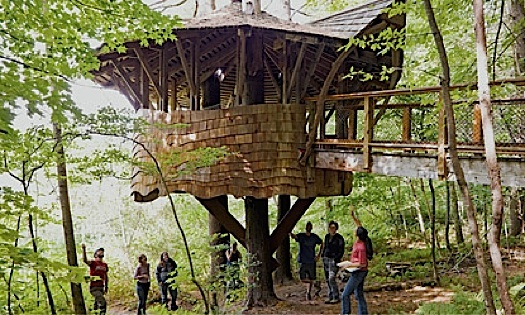
tinkering schools for kids and adults
Gever Tully started a Tinkering School for kids, an exploratory curriculum designed to teach kids how to build the things they think of. By exploratory he means setting kids loose in a shop full of tools and materials (with supervision) and encouragement to “fool around”. In his wonderful TED talk, Tully describes the “deep internal realization”…
Read More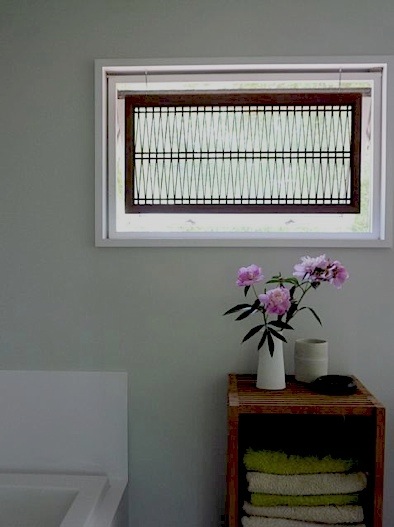
repurpose: japanese screen as window “shade”
Suzanne Shaker, whose spare modernist house was posted here a while back, wanted a window shade for her bathroom that afforded some privacy, let light in and didn’t block the view completely. She found an old japanese screen with paper on the back that was ripped. She removed the paper and her husband Pete added…
Read More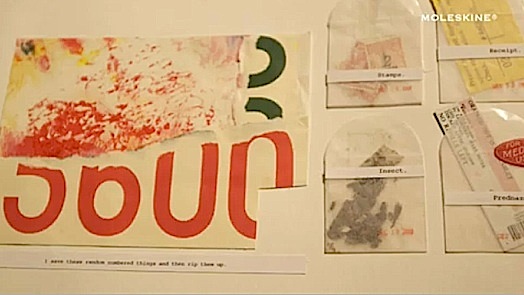
more on inspiration and other visual journals + scrapbooks
After reading ‘ted muehling and the inspiration journal’, designer Pamela Hovland wrote about the many kinds of visual journals she’s kept over the years: “one for my garden, one for my house, one for my summer cabin in Minnesota (all of which are ongoing projects). I keep a visual journal for art and design inspiration,…
Read More