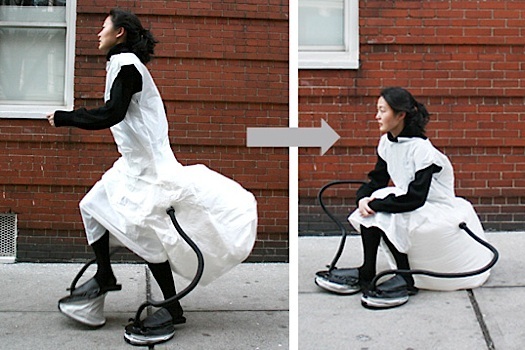
We’ve been a fan of the amazingly inventive artist/designer JooYoun Paek since we came across a picture of her pillowig a few months ago. We’re thinking we should just make a practice of stopping into her website periodically to see what she’s up to and GET OUR HEADS CHANGED in a flash. That happened when we saw two little videos of her wearable inflatable chair dress which made us LAUGH and THINK and IMAGINE all at once.
It’s a polyethylene a dress that’s connected to shoes that pump air into an inflatable bubble attached to its rear part on each step. With each step, the dress slowly transforms into a chair (the view from behind is hilarious). The wearer can sit down when she likes; her body weight slowly deflates the chair back into the original dress. Paek calls her Self-Sustainable Chair a “conceptual garment”:
“…it motivates users to consistently switch between walking and sitting as a loop behavior on the street. The balance between exercise and rest would be maintained by wearing this suit. The purpose of this project is to transform the humdrum experiences produced by routine walking commutes into an amusing interactive performance.”
The effect of Paek’s little videos are really surprising… read more…
One of the big fears (and realities) that can keep us from trying things out, taking them to the next step, or persevering with an idea, has to do with failure. We can judge ourselves like crazy for having failed at something in the past OR be terrified that we will fail in the future; both of those notions stymy improvisation and creativity and LIFE.
So, we’re always heartened when we hear the stories of real people who have failed terribly, learned a lot, found their way AND put incredible things into the world…like J.K. Rowling’s story of her “epic failure” years before writing the Harry Potter books, and what she learned from it, the unexpected gifts it brought. She shared it in her commencement speech at Harvard in 2008, which seemed to surprise everybody.
Here’s the video of the whole thing, and our edit of the essentials to read: read more…
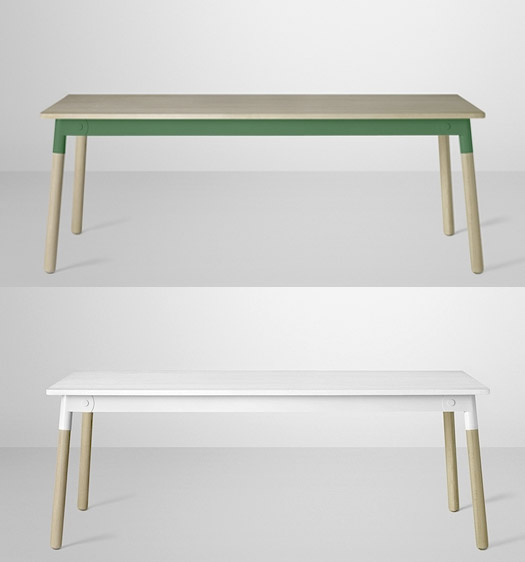
Jon at Happy Mundane spotted these cool adaptable dining tables by Muuto (which means “new perspective” in Finnish) that can be ordered with different legs, tops, and colors. They reminded him of the possibilities for painting wooden tables in interesting ways by masking off parts with tape, something he did to wooden chairs a while back with great success. Here’s his how-to with the gist of this simple idea…and pix of the chairs…AND some resources for cheap wooden tables that would look cool (and expensive) painted this way… read more…
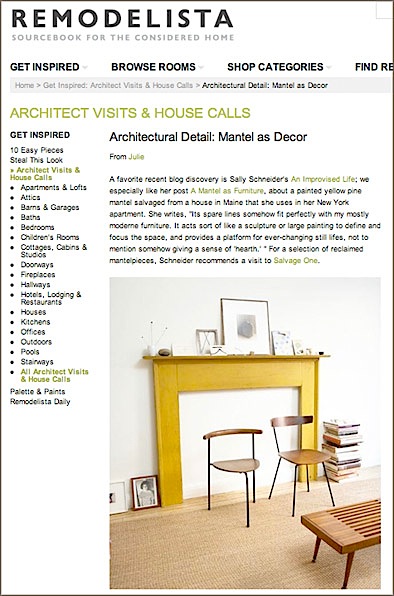
We were THRILLED to see ‘the improvised life’ blogged today in the renowned home design site Remodelista, as “a favorite recent blog discovery”. They featured our post A Mantle as Furniture (No Hearth).
This picture is of the salt flats in the amazing Mojave desert in California. If you didn’t know it, you’d think it was a sparkling sea: a perfect visual antidote to March (which is going on way too long)….
It was taken by Morgan Satterfield, during a road trip/break from her blog The Brick House, which is about renovating her mid-century cement house on-the-cheap. Morgan has a $100 Rule: “Do not spend over $100 on any ONE item.” That seems like a thrifty challenge that would make for some interesting improvisations (which you can check out by searching the categories ”before” or “after” on her site)…
The best thing about The Brick House is you get to see the slow process, and the way stuff stays UNDONE for a pretty long time until she and ‘The Boy’ can get it together, with limited resources and time, to tackle each project. We need to be reminded that renovating a house, creating a blog, bringing ANY idea to fruition takes time… step-by-step with lots of switchbacks and unexpected delays…and much needed breaks…until the sum of many small successes and steps completed = SOMETHING SWELL!
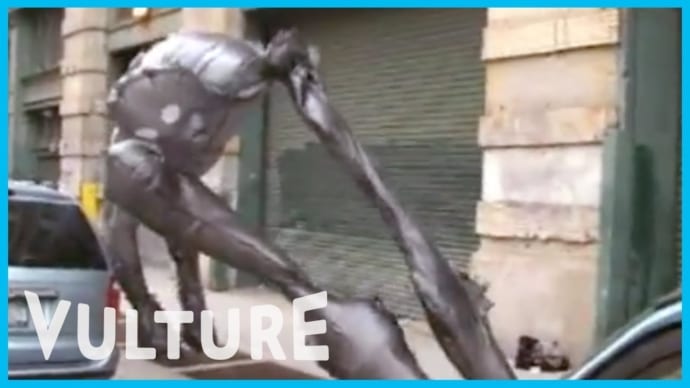
New York Magazine sponsored this video about Joshua Allen Harris’ and his very cool street sculptures. He creates giant creatures out of taped-together plastic bags and positions them on subway grates; gusts of warm air from passing trains inflate them momentarily, animating them. He’s made a Loch Ness monster and an uncannily life-like polar bear, which rises up and then falls as though asleep or wounded:
“He has a lot of nice animation to him, with his life and his death, and his inflation and his deflation…The city decides how it is going to animate the sculpture.”read more…
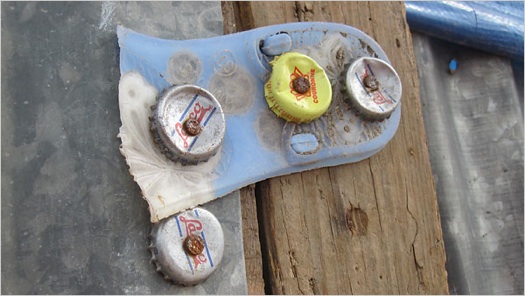
A couple of weeks ago in the New York Times, Lawrence Downes wrote a beautiful report from Haiti called The Kite Makers that painted a vivid picture of the devastated country in a few short paragraphs. He described the resourcefulness at play everywhere for those “with skills, strength and luck”. At the Petionville Club camp – donated tarps forged into houses – someone made an ingenious door hinge from the torn sole of a plastic sandal, fastened by nails hammered through bottle caps, which act as washers to prevent sandal from tearing. “Making do with next to nothing is the way of life in Haiti”.
Haitian children make small kites out of whatever they can find – twigs, dry cleaning bags, thread spooled on a can or bottle . Flying homemade kites is relief from their harsh reality. read more…
We wish there were a way to beam ourselves (a la Star Trek) to a conference taking place in Lahti, Finland on March 24 to 25, called “Designing Slow Life”
“…international experts of design, service design and wellness talk about and develop services under the main theme of better, slower and more meaningful life...The Slow Life conference will try to solve how to develop our surroundings in future in order to support slower life.”
We’re dying to know where the challenge will take them, and how design (and designers) can help “support slower life”.
Are there ways to create environments to help us slow down? (Isn’t that what a park is?) We’d like some software that would limit our computer use for a start…because that’s something we feel powerless over, and we love the internet so much! Or is SLOW really something that each of us has to figure out for her/himself, a practice or discipline to be consciously embraced?….
A commenter at Core 77, where we read about the Slow Life Conference, wrote: “Can we offer ‘slow life’…suggestions? e.g. slow life sport = yoga?”
Good question!
Although we’re (sadly) not going to Finland, we’re going to mull the this idea of designing a slow life and see what we come up with.
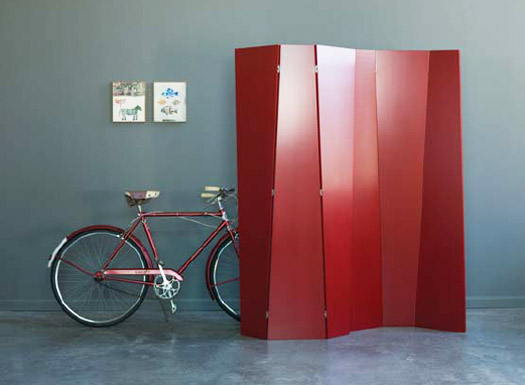
Atlas Industries, who makes gorgeous, furniture-like, fiercely expensive shelving and storage, sent us an announcement of a new product: a folding screen. We are always on the look-out for folding screen options to divide rooms and hide the stuff we don’t want to look at in our small space. The screen costs $2400 and we’d want at least two to put end to end; $4800 + shipping!!! In their brochure, Atlas included a little plan-like drawing that looked pretty simple…they even mentioned that it is made out of plywood, with SOSS invisible hinges. We began to imagine making our own cool, CHEAP version of the screen using birch ply. So we wrote Nina Saltman, our construction project consultant: ”Are we crazy or what, but wouldn’t it be relatively easy to make one of these screens?”
NOT!
Here’s what very smart, experienced Nina wrote back, and the great useful trick we learned: read more…
In a recent New Yorker Talk of the Town, we came across this surprising image: a Japanese ukiyo-e print by Utagawa Kuniyoshi made in 1842 (from a show at the Japan Society). It’s called “Haysuhana Prays Under a Waterfall”. The idea knocked us out: of praying, meditating, thinking… just plain sitting… under a waterfall, for a while.
(One hundred and fifty years ago Kuniyoshi created hundreds of wild woodblock prints of giant spiders, skeletons, women warriors, ghosts and samurai…Apparently his work has had a major influence on today’s manga and anime artists. You can see more here.)
Brasilian musician Hermeto Pascoal is famous for making music with unconventional objects. (Miles Davis called him “the most impressive musician in the world.” ) Here’s Pascoals astonishing Musica de Lagoa, made in a lagoon…the lagoon made into a instrument…
“Fascinated by the sounds of nature since he was a little boy, from a pumpkin mammon pipe he made a fife with which he used to play for the birds. He liked to spend hours in the lake playing sounds with the water, and also to pick every piece of scrap metal in his grandfather’s blacksmith shop to hang them in a rope to take sound of them. When he reached the age of 7-8 years old, he decided to try his father’s 8-bass accordion, and never stopped.”
Of course, it got us thinking about making our own music, somehow, and then we opened up a favorite book (that’s worth a post unto itself) to this: read more…
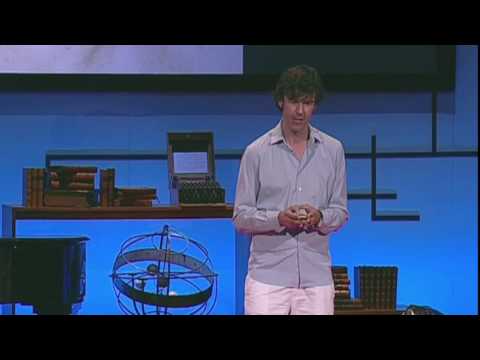
Last December, Pam Hunter, the mastermind behind Studio 707, THE Public Relations firm in Napa Valley, closed its doors to take a sabbatical. On her website’s last post, she told the story of meeting two artists over the years whose practice of taking long sabbaticals from their work had impressed her deeply. Spain’s Fernan Adria, considered one of the world’s greatest chefs, shutters his restaurant El Bulli for five months each year, and told Pam how the experimental months of his sabbatical revitalizes his creative alchemy in the restaurant. Brilliant Austian-born designer Stefan Sagmeister, closes his design studio for at least a year every seven years, so that he and his staff can explore projects the don’t have the time to do when they are working. Pam had almost worked with him on a project but he was about to go on sabbatical, to which he is committed.
“Possessed as I was by the approach of both Adria and Sagmeister, I couldn’t bring myself to take the leap off the treadmill. That is, until late one afternoon in June 2009 when I received the telephone call that reframed everything instantly. ’You have cancer,’ said the voice on the other end of the line. By February I hope to be in remission and ready to begin my first sabbatical.”
Pam included a link to a Sagemeister’s riveting TED talk about why he insists on the year-long break for himself and his staff, and how it works…what it is really like, the kind of discipline needed. Pam’s post got us thinking read more…
The produce section of my local supermarket is so lackluster that it generally discourages me from buying of any fresh vegetable except onions or bananas. Wandering through on my way to buy ice cream yesterday, I spotted a trove of Meyer lemons – six for $2 – and knew that these fabulous citrus had finally made their way from “gourmet” to mass market. Although Meyer lemon season usually starts winding down in March, the lemons were in good shape. When I scratched the skin of one, its unique perfume was released: like lemon and tangerine with floral undertones. read more…