October 2012

please let us know if you are receiving your daily email

It appears that our Daily Email may not have been reaching ‘improvised life’s’ subscribers since we started posting yesterday. Please shoot us an email and let us know if you’ve received it or not.  If not, we really apologize. We’ll work hard to get the problem with our email service fixed.

In the meantime, please come directly to the ‘the improvised life’ to read posts. We appreciate your bearing with us during this time of technological mayhem.

Thanks — The Management

“build or destroy” (patrick martinez’ neon signage)

patrick martinez

Patrick Martinez’s neon sign made us think. We believe strongly in building…

…but if you aren’t building…

are you destroying?

OR… read more…

tin-patched wood floor: kintsugi in action

Mindy Marin's renovated barn

photo: heidi swanson

Not long after we posted about kintsugi, the artful repair of damaged things, we came across these photos of a worn wide-plank Douglas Fir floor patched with tin in Mindy Marin’s renovated barn Bluewater Ranch. A perfect example of modern-day kintsugi: the undisguised tin becomes part of the design on floors whose age and wear makes them both interesting and beautiful. read more…

how to disappear ugly power and electronics cords

how to hide computer wires

photo: sally schneider

After we set up our office’s wonderful 15-foot desktop, we were dismayed to see the ugly cords dangling underneath – power strip, hard drive plugs, usb hub etc. Because of where our electrical outlets are placed, and the fact that we need to be able to access the various  cords, we couldn’t simply hide the cords behind the file cabinets. We cast about for a solution, first propping a white-painted plywood scrap leftover from the renovation against the wires. read more…

finding a clear work space + e.b. white on “stuff”

photo: jill krementz

Although our borrowed cabin in the country was not quite as spare as Charlotte’s Web author E.B. White’s enviable makeshift work space (in his boat shed overlooking Allen Cove in 1976, pre internet), we are refreshed by going minimal for a week, in nature and quiet.

We were so intrigued by White’s utterly simple, focused space, that we browsed some of his essays. We were amused  and heartened to read of White’s eloquent stuggle with “stuff” in “Goodbye to Forty-eighth Street:

For some weeks now I have been engaged in dispersing the contents of this apartment, trying to persuade hundreds of inanimate objects to scatter and leave me alone. It is not a simple matter. I am impressed by the reluctance of one’s worldly goods to go out again into the world. During September I kept hoping that some morning, as if by magic, all books, pictures, records, chairs, beds, curtains, lamps, china, glass utensils, keepsakes would drain away from around my feet, like the outgoing tide, leaving me standing silent on a bare beach. But this did not happen… read more…

going on retreat (back next week)

trees in full fall colors

amber waterman/sun journal

The practice of making a retreat – taking oneself OUT of everyday life to withdraw and reflect –  has been around for eons. It is part of many spiritual traditions, and to our thinking, should be a requirement for everyone (and paid for by insurance – ha) , so filled as our lives are with doing and action.  It’s something that people – including us – used to do a lot more, because life is intense no matter how you slice it and there’s much to reflect on. Sometimes retreating is the only way to see, and detach.

A retreat is a bit different than a vacation, because retreats generally are about taking refuge from the world, notdoing, and about attending to the spirit. Just being. Listening. Taking stock. read more…

kintsugi: the artful repair of damaged things

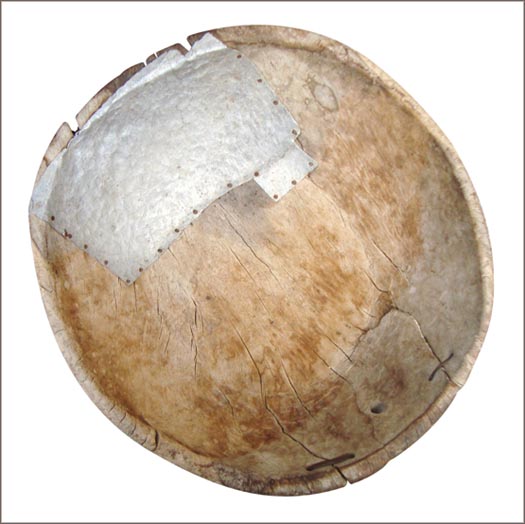
Our favorite column at the very cerebral blog Design Observer is John Foster’s Accidental Mysteries, compilations of photographs around a theme. This week’s post focuses on the Japanese tradition of  kintsugi — the artful repairing of damaged objects, and illustrates the beauty of broken and repaired things. This 18th century carved wooden bowl being sold at David Bell antiques is being described as “Perfectly imperfect.”As is this antique Japanese textile: read more…

leap: risking not being brilliant (but wonderful still)

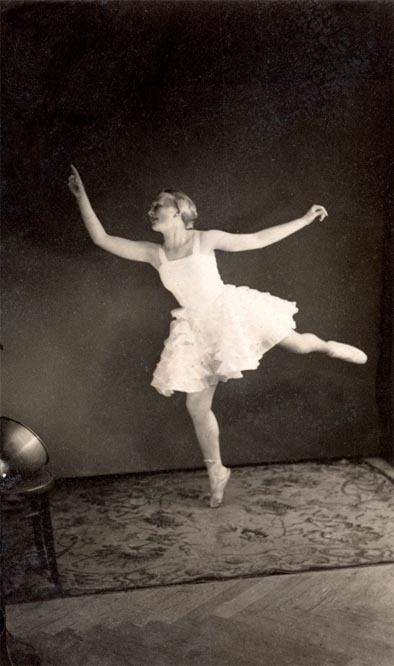
ballerina mid-flight

photo credit: collection of john and teenuh foster

We’re adding this to our collection of “leap and fly” photos that we see as so emblematic of the willingness to “take a leap”, risk, try new things. We love this one because the dancer is so game, and looks like an ordinary person doing what she loves, maybe not brilliantly, but wonderful all the same.

via Design Observer


photos courtesy collection of John and Teenuh Foster

Related posts: when going slowly is ‘taking a leap’
jump! leap! (philippe halsman)
glacier point: wonder and daring
‘jump!’ (the movie)
‘leap and the net will appear’…

at last: washi tape wallpaper you can buy

photo: hellosandwich

Every since it burst on the scene, we’ve been in love with washi tape masking tape, using it for all sorts of decorative purposes, from wrapping gifts to tacking images or making signs on walls; we’ve posted about it a number of times.  Then, over a year ago, we stumbled on a post about washi tape wallpaper, wide rolls of washi tape you could apply to your walls, and repositioned like masking tape, only these are really wide swaths of color. Darned if it wasn’t available, just like a lot of the great design ideas we find, so we didn’t post it.

Until today, that is. read more…

giuseppe penone’s tree + ‘the hidden life within’

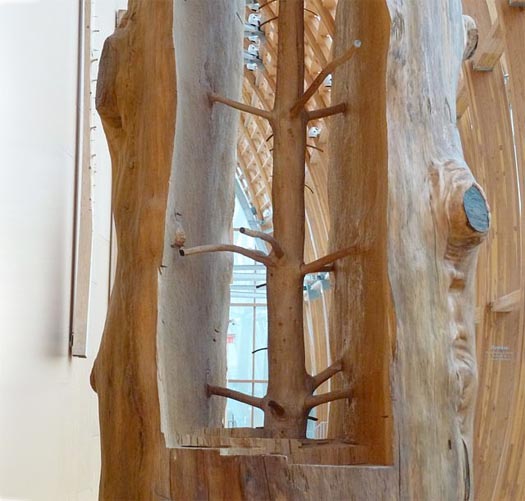
Cedro di Versailles, a sculpture by Giuseppe Penone

We were knocked out when we saw this picture of sculptor Giuseppe Penone‘s sapling within a tree that he says is about “the hidden life within.”

We thought of many things at once, many of them corny, but true nevertheless…of the origins and emergence of ideas, and the little kid that remains within each of us (yikes!)

We went looking for more about Penone’s work and found this astonishing image: read more…

hut built over 5 years with salvaged materials

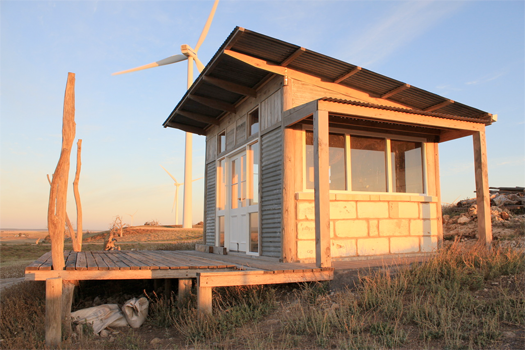
hut built over five years with salvaged materials

We love checking in to Cabin Porn a site which provides “inspiration for your quiet place somewhere”, which right now, is in our heads.

Recently, we became smitten with this hut overlooking Lake Bonney in the southeast of South Australia. All we know is that “it was built over 5 years with salvaged materials”; no other details were given. So we looked close at what those salvaged materials might be: we saw corrugated aluminum, windows, concrete blocks, reclaimed timber, a door, some sort of thin modern glass, driftwood…

Inspired, inspiring. A place to think…

Related posts: house tour: laura handler’s montana log cabin
cabin porn fave of the day: garden cottage, netherlands
‘tiny homes: simple shelter’
favorite escapist blog: cabin porn
the unexpected stylishness of walls of stacked logs

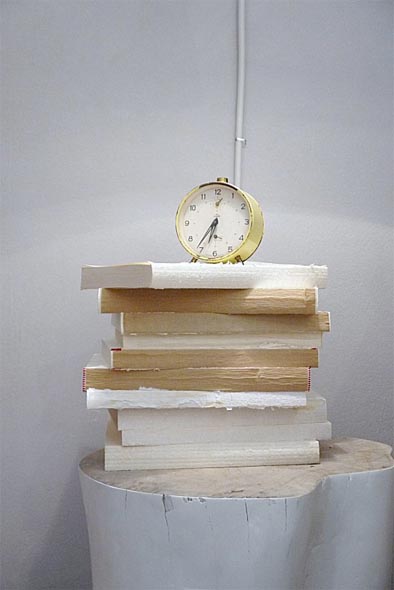
naked and defiled: book bricks as decorating element?

books with covers torn off stacked as decorative element

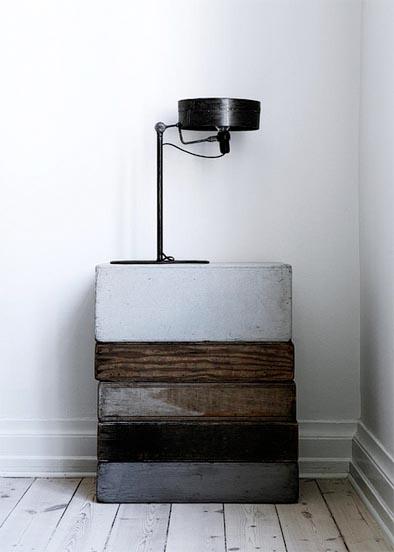
When we first saw this stack of books-stripped-bare of their covers to reveal neutral color and graphic texture, we thought: what a cool material for doing all sorts of things. Stack em to make stools, displays and ad hoc tables, or supports for low shelves. Books as bricks. Then we wondered: Could we really justify dismantling books in such a way?

Well yeah, maybe. There are all sorts of books that we’d feel justified in taking the covers off: falling apart ones, water-damaged ones, cheap ones, and especially fat catalogues. We tried it with the huge Outwater Hardware catalogue and found it made a lovely “brick” (we might glue a neutral top page on to the printed one). read more…

amy friend’s photographs: cosmic connect-the-dots

photo: amy friend

We’ve recently discovered a new series of photographs by Amy Friend called Dare alla Luce:

Through small deliberate interventions, I altered these vintage images, allowing light to pass through them. (After all, photographs are made possible with light.) In a literal and somewhat playful manner, I aimed to give the photographs back to the light, hence the title of the series, Dare alla Luce, an Italian phrase used to describe the moment of birth.


We couldn’t help seeing the lights as connectors, between people, ideas, feelings, memories, the past and present: those subtle-body kinds of communication and experiences that happen all the time, that we’re made of, and out of which we make things. read more…

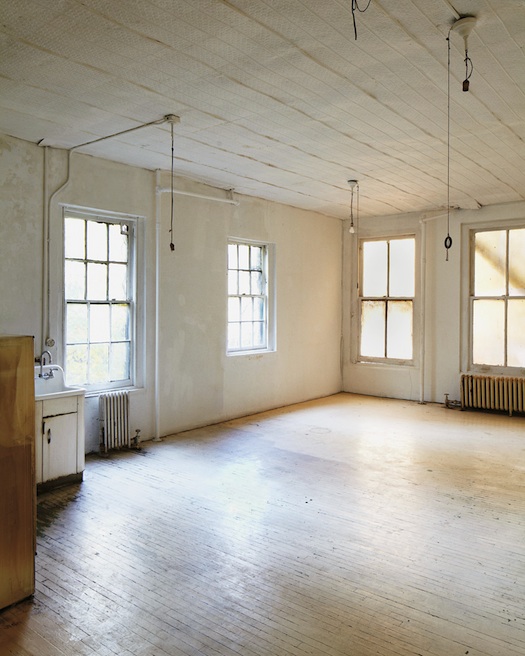
how would your decorate this blank slate space?

photo: william abranowicz

In this Sunday’s NY Times T magazine, we were happy to see the cover story on John Derian’s East Village apartment photographed by our old friend Bill Abranowicz (whose beauty of a book on Greece we featured some time ago.)It starts with a photo of the naked, as-is space, rife with possibilities. We realized we were relieved we were to see an undone, unslick, unmodern, messy space, tired as we are of clinically modern interiors-porn that are everywhere. Derian had the courage and vision to leave the essentials be.

We loved imagining how we would handle the space were it ours, and then looking at the photos of what Derian did (swell befores-and-afters here), and seeing how our sensibilities differed or grooved with his (we’d nix the dark armoire between the windows blocking all that light and sense of space…but yeah, what about storage?) read more…

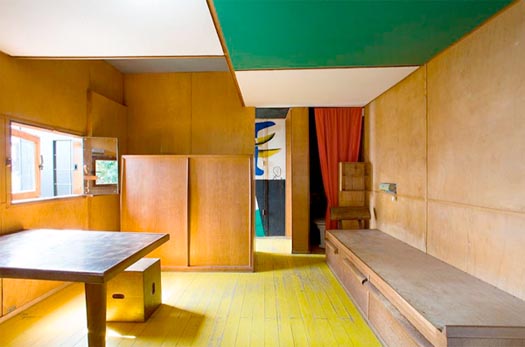
color lessons from the homes of 10 famous architects

Architect Le Corbusier's Le Cabanon in Roquebrune-Cap-Martin, France

photo: city-furniture

Le Cabanon by Le Corbusier – Roquebrune-Cap-Martin, France

Being weak (but learning) in the interior color department, we’ve loved Flavorwire’s recent round-up of the Surprisingly Colorful Homes of 10 Famous Architects. Although we’ve actually been inside Le Corbusier’s Le Cabanon in the south of France, we hadn’t quite realized just how much color he’d incorporated into his largely plywood interior. The slideshow covers a lot of territory, including the fabulous use of pink Luis Barragán made at Casa Barragán in Mexico City, the wonderful seemingly impromptu way Ray Kappe placed painting right next to the bed at his house in Los Angeles, and Albert Frey’s cool use of a corrugated metal ceiling in his house inPalm Springs.   We especially love Finn Juhl’s understated home in Ordrup, Denmark. read more…