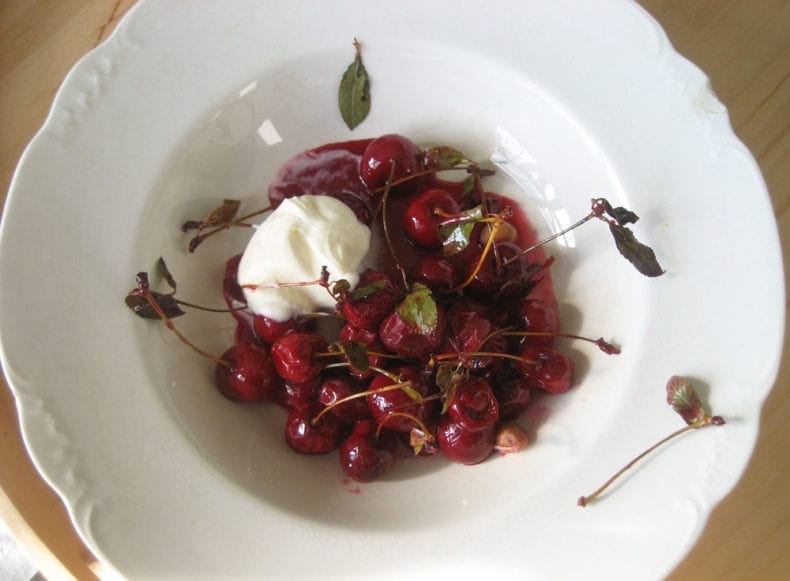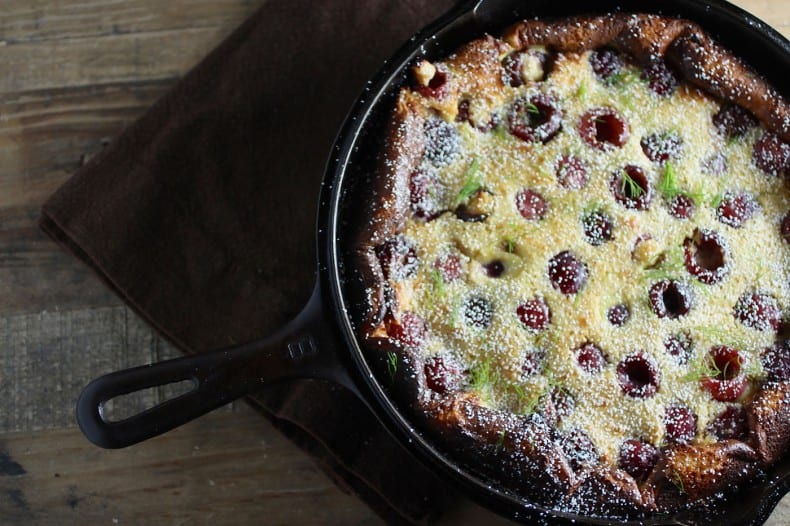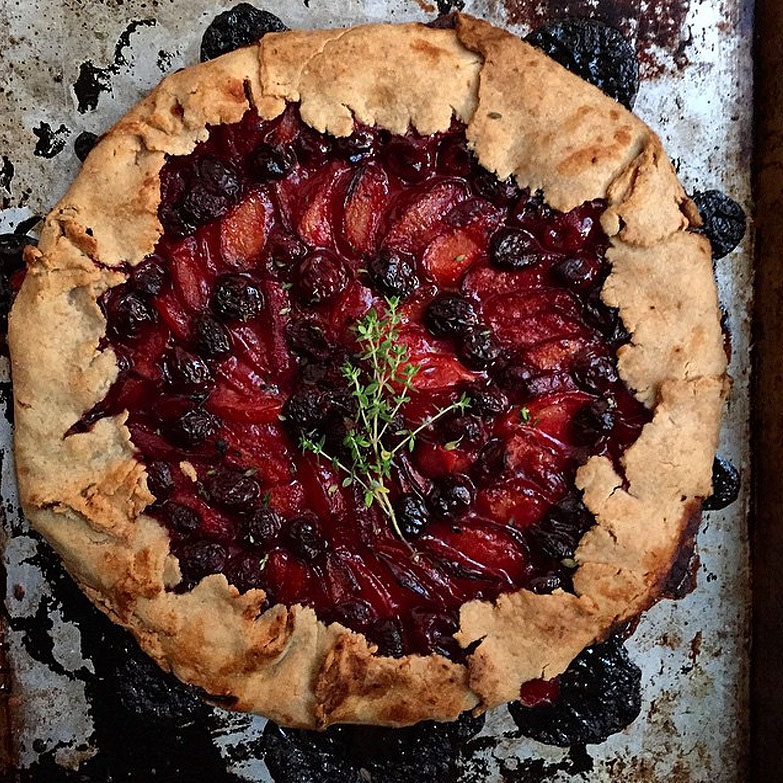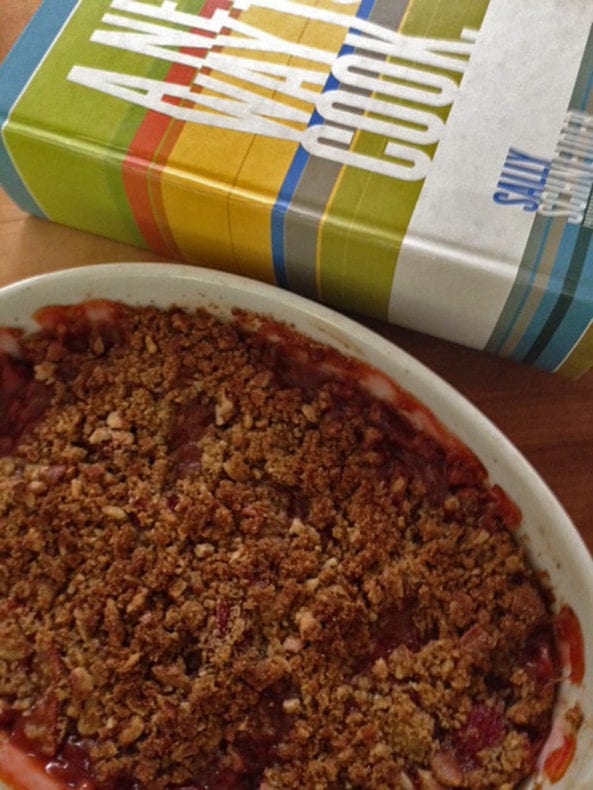
It is high season for ramps, the pungent wild leeks that grow throughout the Appalachian and Catskill mountains. Ellen Silverman sent us photos of the sublime ramp butter she was given by a friend, with an utterly simple recipe that will keep you in ramp heaven for days. She wrote this in her email:
“Cyd McDowell is an amazing food stylist and lover of all things food. She picked the ramps on her property upstate she lives near Great Barrington. All she did was chop the ramps put them in the food processor with good salted butter (I think she used Plugra)… and process. She brought the butter to me when we met for a coffee; it was in a little glass bowl with a round of natural wax paper placed on the top.
We ate it on everything for three nights…on fish sauteed one night and panko-fried another, roasted chicken, steamed clams, bread, asparagus, potatoes; we licked the remains off of our fingers! Now, very regrettably, we have finished it…”
What a gift!!! We could imagine ramp butter in risottos, on pasta, on grilled meats, to cook scrambled or fried eggs in, and of course, on toast…
Here’s a rough little recipe that allows you to gauge the “rampiness” of the butter, and calibrate it as you wish: read more…
We’ve been getting emails from friends who are on their way down to the ramp supper in Helvetia, West Virginia – ramps being the pungent wild leek that grows throughout the Appalachian and Catskill mountains. We wrote about the supper this time last year, when we were headed to Helvetia ourselves, to the feast served family style in the community hall by the Farm Women’s Association – ham, beans, cornbread, slaw, applesauce, hash browns, ramps raw and cooked.
The 2011 ramp supper marks a year of big changes: two of Helvetia’s visionary elders passed away and the unique Swiss culture of the town seemed threatened. But the younger folk there are pulling together to protect and nourish what they realize to be a rare place, carrying on its rich traditions and legacy. In honor of this big transition, we reprise a chunk of the post Sally wrote last year about the spectacular Helvetia Ramp Supper, including a recipe that contains a basic method of preparing ramps that can be used for endless improvising. We offer it despite having recently read the disturbing news of the threat to ramps from over-harvesting reported in the New York Times. We don’t want to stop eating ramps – but we want to know that they were harvested sustainably, and perhaps, buy less this year, just a taste’s worth to remind us of the wild…
One of the reasons that we so look forward to the latest issue of Canal House Cooking, the ongoing cookbook series by Christopher Hirsheimer and Melissa Hamilton, is that the recipes resonate so deeply with the way we live. In other words, they completely cut the $#*!@, providing us with ideas and recipes that are of the season and senses, do-able in our insanely busy lives, AND which work from the inside out: each recipe seems to ask “what do our spirits REALLY need? What do we need to be fed?”.
Take for instance our favorite chapter of the newly-released Volume 6: Crax & Butter for Dinner. Crackers and butter is our secret perfect meal; although it seems unmeal-like, it is somehow utterly nourishing and satisfying. Volume 6 presents endless plays on the theme of crackers + ______, from homemade Pimento Cheese to Anchovy and Lemon Butter, not to mention a lovely recipe for Tender Cheese Crackers: butter and cayenne-dusted Parmigiano held together with a bit of flour to make little savory bites that melt in your mouth (it would make a swell pie crust for an apple or pear tart…)
But Volume 6′s recipe offerings range to many compelling, simple dishes that we could imagine making for a heartening lone supper, like read more…
It smacks of Paltrow’s friend Mario Batali’s influence (He is one of the best cooks we know). In lieu of the traditional and somewhat time-consuming cream sauce and grating of American cheese, Paltrow uses marscarpone as a base for freshly grated Parmigiano (easily bought) as the sauce for the macaroni. Fast and furious, with those big-guns ingredients, it cannot fail. You’ll find the recipe at the end of the post… read more…
Easter is next Sunday, and we’re planning on dyeing Easter Eggs, the holiday’s totally fun, messy activity that invariably yields charming results. Eggs become our blank canvas on which to improvise all sorts of gorgeous colors and designs. We love Ambatalia’s post on making your own plant-derived egg dyes out of ordinary foods, like onion skin for sienna and orange; turmeric for deep golds and pale yellows; blueberries or red cabbage for blues; coffee for browns. We’ve found that beets give lovely shades of pink and red. You can layer the dying process to mix colors: red cabbage dye followed by grape for purple…turmeric followed by red cabbage for lavender.
Her name is Katie and here’s the kitchen improvisation she sent in:
This recipe is a riff on The Splendid Table’s Lynn Rossetto Kasper’s Sweet Sicilian Sauce recipe, found at this link.
I make this late in the fall when the tomatoes need to be picked so they don’t freeze, but are a bit green yet. I mix the green-ripening ones with red ones and the result is a more “soupy” sauce than Lynn describes because of all the fresh juices. So I take an immersion blender and blend it to a smooth, creamy consistency.
This is to-die-for sauce for pasta and people beg me for the recipe. The vinegar and sugar offsets the greenness in the tomatoes and the blend of tomatoes gives it a richer flavor than canned ones. It works!
Katie’s sauce is just one example of the many truly inspiring stories and improvisations we received (you’ll find them as Comments at the end of the post)…well worth reading for their many good ideas.
Every since we saw the videoAndrew Carmellini, mastermind of the great Locanda Verde, made to build buzz in his soon-to-open NYC restaurant, Dutch, we’ve been FEELING the restaurant as it comes together in the crazed couple of weeks before opening. Maybe that’s because Sally actually worked nearby at the old Soho Charcuterie on Sullivan Street; she made pates and terrines all day in the basement prep kitchen and would take breaks in the bocce court next door (now long gone, along with the neighborhood’s Italians). Restaurant memories live in the bones.
Maybe it’s because the video (possibly even better with the sound off) conveys a sort of chef head of late night foraging around town, of all the things that fly IN to that head that end up becoming a dish.
We were so intrigued, we took a screen shot of the quickly uncrumpling blueprint in the video so we could take a closer look at the new restaurant: read more…
You can “look inside” The Improvisational Cook on Amazon or go to Sally’s website to read reviews and how it came about.“Schneider gives cooks the know-how to embellish, adapt, change, alter, modify and experiment in their cooking with plenty of encouragement and helpful information. Here are the tools and insights everyone needs to find his or own voice in the kitchen…”
For a recap on how to enter (it’s easy!), a few rules AND to read the great entries that have been submitted so far, click here.
The other day we were browsing through Leite’s Culinaria and stumbled on Coleman Andrew’s “recipe” for an ice cream float made with Guinness Stout. It fits fine within the “ice cream with flavorful alcohol” theme we are partial to, vanilla being a perfect foil for the chocolatey/spicy/bitter/maltiness of stout. (Our Amontillado Milkshake walks a similar line of grownup flavors). A Guinness Float is a brilliant play on the classic float idea: ice cream with something fizzy poured over, like root beer, or Coke.
Andrew’s divine and very grownup dessert is not really a recipe at all; it is more an equation:
really good vanilla ice cream like Haagan Daz’ Five Vanilla Bean + any really well-made RICH dark stout beer
(It couldn’t be easier to make: you spoon ice cream into a glass and pour the stout over, then eat with a spoon).
One of the staples of my pantry is a classic herb salt fragrant with rosemary, sage, and garlic that is used all over Northern Italy. I learned the recipe - or I should say approach – years ago while traveling with Peggy Markel on one of her Culinary Adventures, and have never grown tired of it. It is good on just about anything. You can use it as an essential seasoning to “salt” roasts of all kinds from pork and beef to chicken, game birds, and duck. It’s also great on vegetables of all kinds, dried beans, popcorn, potatoes, even a bloody Mary for a la minute flavor-enhancement. It gives herbal notes to my fried egg in the morning.
The method is simple: you chop herbs, garlic and salt together, either by hand or with a food processor, then spread the mixture on a sheet pan. The salt dries out the herbs preserving their vivid flavor for months. You can improvise endlessly on the basic formula by improvising your own mix of herbs…Thyme, rosemary, and savory with a touch of lavender will make a lovely Provencal herb salt…(There’s a whole section about seasoning salts in The Improvisational Cook.)
If you are flat-out busy and just want to BUY a great herb salt, I heartily recommend the one from Italy that wine writer Anthony Giglio (a big fan of our herb salt) told us about; read more…
William Morrow, the publisher, has been busy blogging, tweeting and facebooking about Sally Schneider’s The Improvisational Cook, newly launched in paperback. They recently blogged a “Conversation” with Sally, with questions like “What’s your Mantra”, and “If you could have dinner with three people, living or dead, who would they be?” They are tweeting it as the “juicy details of her culinary private life”. You can read it here.
We love her juicy details but we were most interested to read about the experience that changed her life:
“Waking up from a dream KNOWING that I should cook professionally. I quit my job and started working as a prep cook, eventually becoming a restaurant chef…running a catering business…working as a food editor… as a food stylist…magazine columnist…contributing editor….radio commentator…cookbook author (three times)…”
One thing led to another and then another and another, eventually leading her HERE: ‘the improvised life’.
At the Harper Collin’s blog The Secret Ingredient, Tavia posted her experience with Sally’s just-released-in-paperback The Improvisational Cook. The gist: Tavia considered herself an improvisational cook until she realized that…
“…it…doesn’t quite mean the person who leans into the fridge and whips up a stir fry with the crudités that are left from the Super Bowl dip tray. (I will neither confirm nor deny if I have assembled such a meal.) What Sally is getting at in The Improvisational Cookbook… is building a repertoire of recipes that we know by heart so that we can then begin to tweak and adapt them to use for different dishes and meals. It means asking why not,it means pairing flavors courageously, it means knowing when a culinary accident is in fact a happy one. Sally wants us all to be fearless improvisers in the kitchen—and I am touched by her confidence and support.”
The Bittersweet Black Pepper Brownie Cake (also known as Essential Chocolate Cake for Improvising) is an example of the kind of culinary riffs that occur once you understand the inner logic of a recipe. Sally devised it when she was fooling around with a recipe she’d made as a chef, for an over-the-top chocolate cookie read more…
The paperback edition of Sally’s award-winning The Improvisational Cook is OUT IN THE WORLD as of this morning. The book was the precursor to ‘the improvised life’; apply the blog’s heart and practicality to cooking and you’ll get the gist. It’s a guide ‘in’ to cooking improvisationally, more freely and with what’s on hand. Chapters include How Improvising Works, The Creative Mind-Set, Accidents and the Unexpected, and Learning What Goes with What, along with a ton of mutable recipes and ideas for making them your own.
Our favorite reviews sum it up:
“Schneider weans home cooks off their training wheels and provides a springboard from which they can leap out of the box, craft their own distinctive dishes and let their new instinctive and creative juices flow.”
— Mario Batali, legendary chef and Food Network star
“Innovative . . . a delicious revelation.” — O, The Oprah Magazine
“What a triumph. One of the most gifted cooks I know thinks onto the page in a way that cossets the novice while inspiring the old hand to reach to new territory. You will build a reputation on this book and build the kind of confidence few know in the kitchen. Sally Schneider is the master of ease, imagination and style.”
— Lynne Rossetto Kasper, host of The Splendid Table, American Public Media
Valentine’s Day is one week away so we thought we’d start thinking about it now, rather than our usual last minute scramble. Chocolate is, of course, the classic valentine, so we’ve rounded up our very best chocolate desserts and gifts, all homemade, all easy to make. Here are our recommendations, with annotations:
Homemade Chocolates for Improvising… a foolproof method for making sheets of fine chocolate spiked with unusual flavors and textures, like curry powder and sea salt; Marcona almonds and pimenton de la Vera; dried cherries and lavender…